
 0
0
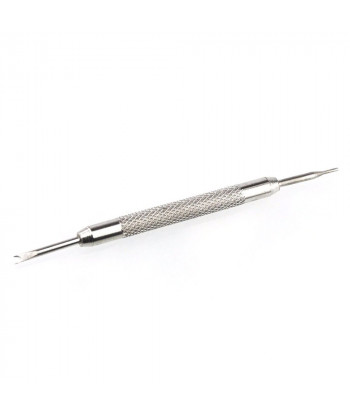
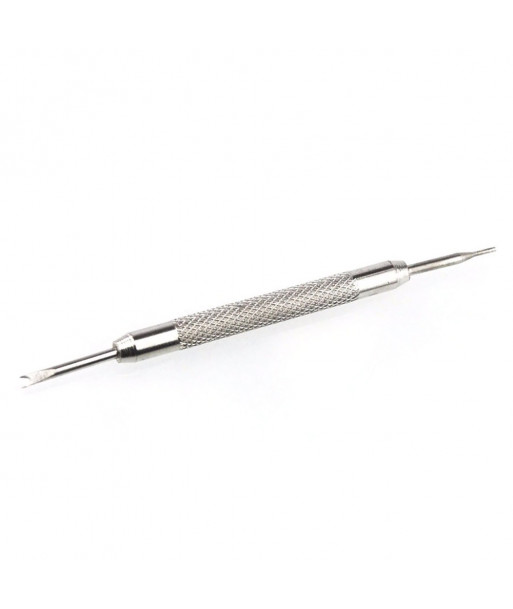
Precision stainless steel positioning awl with two working ends, designed to manipulate spring bars and bracelet pins.
 Delivery policy
Shipped within 24h. Free shipping from €29 in France and internationally.
 100% Secure Payment
A secure payment on our online shop!
A precision stainless steel positioning awl with two working ends, designed by watchmakers to manipulate spring bars and bracelet pins. A compact dual-purpose tool for any workbench.
This watchmaker tool is a positioning awl manufactured in stainless steel, measuring 8 cm in length. It is equipped with two heads that complement each other for the daily handling of spring bars and pins. The first head is a small fork-shaped hook that grips and positions or removes a spring bar between a case lug and a bracelet end. The second head is a fine point used to push pins, align link holes or guide any small bar found on a watch.
Use the positioning awl whenever you need to change a watch strap or bracelet, replace a spring bar, fit a new clasp or align bracelet links. The hook end is the most efficient way to compress a spring bar against the case ear, while the point is the perfect helper to start a pin through a link hole. The tool is also valuable for adjusting the clasp of a bracelet or removing a stubborn spring bar from a folding buckle.
This watchmaker tool is selected, checked and shipped from our workshop in France. Each piece is inspected before dispatch to ensure that the heads are correctly formed and free of burrs. Orders are usually shipped within 24 to 48 working hours.
If used correctly, no. Always apply the hook on the spring bar and not on the case itself.
Yes, the head fits standard spring bars. For some specific bars, dedicated factory tools may be preferred.
No, it is a positioning point. For driving pins use a dedicated pin punch with a hammer.
Always work on a clean, soft surface to protect the case and the dial from scratches. Wear cotton gloves or use finger-cots when handling polished surfaces, since fingerprints can affect gaskets and lubricants over time. Keep your watchmaker tools organised on a dedicated tray and inspect them regularly for wear, burrs or deformation; a damaged tool is the first cause of a damaged watch. After each operation, wipe the tool with a dry cloth and store it away from humidity.
This item is selected from a long-running catalogue dedicated to professional watchmakers and to enthusiasts who service their own pieces at home. We test every reference on real watches in the workshop before adding it to the shop, so you receive a tool that we use ourselves. Combined with our French customer support, this gives you a reliable partner for every repair, from a battery change to a full strap fitting.
Yes. It is straightforward to use and does not require any prior watchmaking training. We still recommend practicing on an old watch before working on a valuable piece.
Yes, we ship across Europe and worldwide from our workshop in France, with tracked options available at checkout.
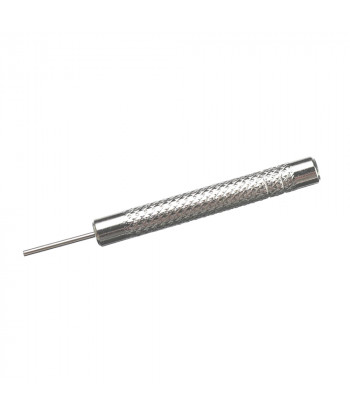
Manual pin pusher for watch bracelets, supplied with interchangeable tips of varying diameter to suit any link pin.
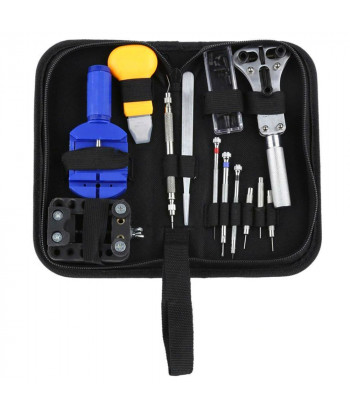
Watchmaker tool roll with 12 essential repair tools and a watch vice, the complete pouch for the home or travelling workshop.
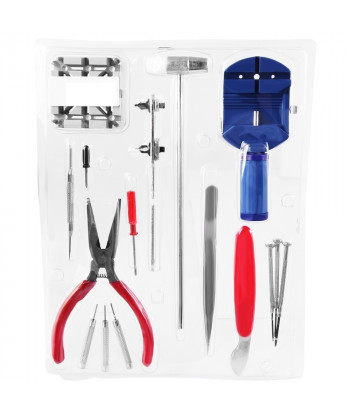
Multi-function 16-tool watch repair kit with pin pushers, hand puller, case opener and tweezers for full home servicing.
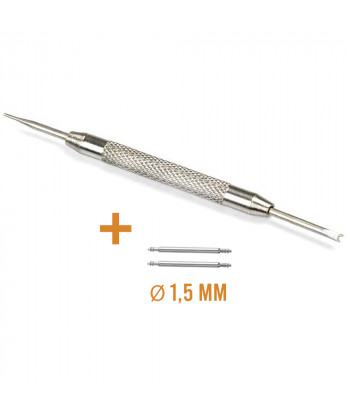
Watch strap repair kit including a positioning pin punch and two spring bars, the essentials to refit or replace a bracelet at home.
Precision stainless steel positioning awl with two working ends, designed to manipulate spring bars and bracelet pins.