
 0
0
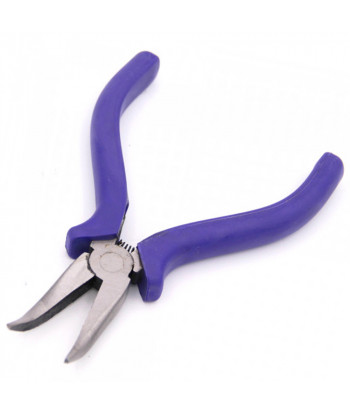
Carbon steel curved-jaw pliers, the watchmaker tool for accessing awkward angles on watch bracelets and small movement parts.
 Delivery policy
Shipped within 24h. Free shipping from €29 in France and internationally.
 100% Secure Payment
A secure payment on our online shop!
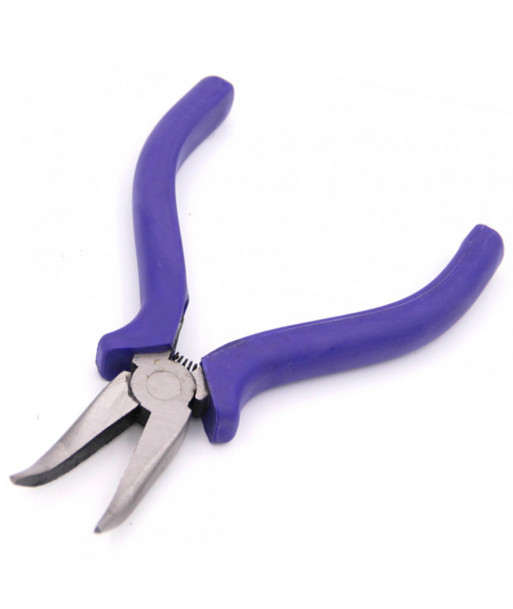
The Repair pliers – Curved jaws, carbon steel is a watch repair pliers with curved, half-round jaws for hard-to-reach areas. It is built from forged carbon steel, total length 13 cm, curved jaws 5 cm long, two-piece handle coated in plastic and is used for gripping watch components in narrow spaces where straight jaws cannot reach, such as inside a case-back or under a bracelet end-link. This watchmaker tool suits watch repair, especially work in confined volumes; also handy for jewellery, eyeglass repair and small electronics, so it slips naturally into the routine of anyone who services watches, hobbyist or professional alike.
If you have ever struggled with a slipping screwdriver, a stubborn case-back or a crown that refused to grip, you already know why a properly sized, well-built watchmaker tool matters more than its modest price. Around the workshop bench this kind of accessory pays for itself the very first time it spares a marred case or a chewed-up screw head.
Look closely and you see a tool that has been thought through. The working surface – be it a blade, a jaw, a tip or a lens – is shaped for the exact job it has to do, and nothing else. Materials are chosen for the right balance of hardness and ductility, and dimensions are tuned to fit the typical hand and the typical wristwatch. Forged carbon steel, total length 13 cm, curved jaws 5 cm long, two-piece handle coated in plastic: that combination means the tool can be picked up, used and put down dozens of times in a row without fatigue.
The intent is to keep your attention on the watch rather than on the tool itself. A precision accessory should disappear in the hand and let the case, the movement, the metal bracelet stay the focus of the work. That is the design philosophy you will recognise as soon as you take the first few measurements or open the first case-back.
You will reach for this watchmaker tool whenever you need gripping watch components in narrow spaces where straight jaws cannot reach, such as inside a case-back or under a bracelet end-link. In practical terms that means watch repair, especially work in confined volumes; also handy for jewellery, eyeglass repair and small electronics. Even seasoned collectors sometimes underestimate how much smoother a job becomes when the dedicated tool is on the bench, rather than an improvised substitute borrowed from a kitchen drawer.
Using the right watchmaker tool also protects the value of the watch. Vintage cases are particularly sensitive: a single deep scratch on a brushed lug or a chewed slot on a stainless screw head can knock down the resale value far more than the cost of buying the correct accessory in the first place.
The handling routine is simple, but doing it well makes the difference between a clean job and a regret. Follow these steps:
Take it slow on the first few attempts. With a relaxed grip and a steady wrist, the gesture quickly becomes natural. Most beginners gain confidence after three or four real-world repairs and never look back.
The watchmaker tool is forged or machined and then ground to size. Surfaces are smoothed enough to avoid leaving marks on the watch but textured where a non-slip grip is required, so the tool behaves predictably even with slightly damp fingers.
To keep the watchmaker tool in form for years, give it three small kindnesses: wipe it clean after use, store it in a dry place, and never use it for jobs it was not designed for. A precision accessory pressed into duty as a chisel or a screwdriver loses its edge quickly. Treated well, it can comfortably outlast the watch on your wrist.
Is this tool suitable for beginners in watchmaking?
Yes, this is one of the more approachable watchmaker tools. The technique is intuitive and, with a soft bench cushion and a steady hand, the risk of damaging the case, the crystal or the gasket stays low.
Which kinds of watches does it work with?
Suited to any wristwatch where straight pliers cannot fit, plus a wide range of jewellery and small repair tasks.
How should I clean and store the tool?
Wipe the tool dry after each use, especially after contact with cleaning fluids or silicone gasket grease. Store it in a dry drawer or a roll-up pouch; a very thin film of light machine oil protects the steel parts in humid workshops.
Browse our full range of watchmaker tools to complete your repair kit and keep every favourite watch ticking for years to come.
Carbon steel curved-jaw pliers, the watchmaker tool for accessing awkward angles on watch bracelets and small movement parts.